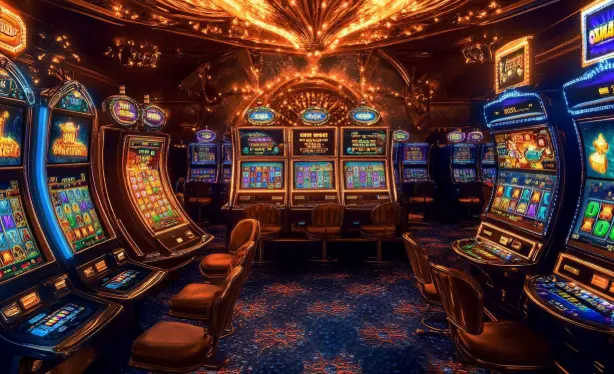
Why USA High Definition Casino Streams Collapse Under Room Echo
Room echo destroys more USA high definition casino streams than bad cameras ever will. A crisp 1080p table feed means nothing when the audio path picks up hard-surface reflections and turns every dealer call into a smeared, metallic bounce. The physical geometry of most home studios is the real enemy: parallel walls, glass tabletops, and bare floors amplify the noise floor until the noise cancelling mic table setup has to fight reflections that no digital filter was designed to erase. Hardware wins or loses this battle before the encoder ever sees a frame.
The hardest part of echo elimination in USA setups is that latency budget and acoustic treatment pull in opposite directions. Push aggressive noise suppression and you add processing delay; pull it back and the echo elimination chain lets room slap leak straight into the stream. This is precisely where most operators get it wrong. They buy a condenser mic with gorgeous tone, park it on a reflective surface, and then wonder why the chat complains about a hollow double-voice on every chip count. 🤬
The Mic Table Is an Acoustic Trap, Not Furniture
A dedicated mic table is not decoration. It is a mechanical isolation platform, and the moment you bolt a boom arm to a shared desk you inherit every keystroke, card riffle, and chip stack vibration as structure-borne noise. Serious USA high definition casino stream operators run a separate, dense-topped mic table decoupled from the play surface. Mass loading matters: a heavy slab kills resonance, while a thin folding table rings like a drum. Get this wrong and no amount of post-processing saves your casino stream audio.

Cardioid dynamic mics reject rear reflections far better than large-diaphragm condensers for close dealer work. Position the capsule off-axis to the speaker, never pointed at a flat wall, and keep the polar pattern's null aimed at the loudest reflective surface in the room. A tight pattern plus a treated corner beats a premium mic in an untreated box every single session.
Echo Elimination in USA Setups: Treat First, Process Second
No plugin removes echo that was captured at the source. Absorption panels on first-reflection points, a thick rug, and heavy curtains do more for echo elimination in USA rooms than any real-time denoiser on the market. The reason is physics: a denoiser models speech and subtracts what it thinks is noise, but room reflections are time-delayed copies of the same voice, so the algorithm either clips the tail or leaves a ghost. Treat the room, tighten the mic distance, and the software suddenly has clean input to work with.

Sample rate and buffer discipline finish the job. Lock the interface to a stable clock, keep the buffer low enough that dealer calls sync with the video, and route a dedicated noise gate rather than stacking three compressors. Over-processing is the silent killer of high definition table streams — it flattens the dynamic range and makes every chip clink sound synthetic. The best chains are boring, short, and measured.
The Hardware Spec Sheet That Actually Matters
Signal-to-noise ratio above 80 dB, self-noise below 12 dBA, and a shock mount that genuinely decouples the capsule from the table. Those three numbers separate professional noise cancelling mic table rigs from gaming-store toys. Ignore the marketing decibel claims and demand measured specs. 🎯 A mic with honest self-noise numbers in a treated room will outperform a flagship capsule bolted to a ringing desk every time, and the difference is audible on the very first stream.
Monitoring matters too. Stream with closed-back headphones, not open speakers, because a live monitor feed re-enters the mic and creates the feedback comb that audiences hear as a metallic sheen. Phase alignment between your mic and any secondary room mic must be checked at the sample level, not by ear, or the two signals will cancel the dealer's voice and leave only the room.
Where Most Operators Bleed Money and Credibility
Every echo artifact on a high definition casino table reads as amateur hour to a paying audience, and retention drops faster than any lighting upgrade can recover. The cost of a proper mic table, absorption panels, and a measured dynamic mic is trivial next to the revenue lost when viewers bail on a hollow, double-voiced dealer call. 🎲 Fix the room, isolate the table, then let the processing do the small remaining work — that is the entire discipline, and nothing after it changes the outcome.