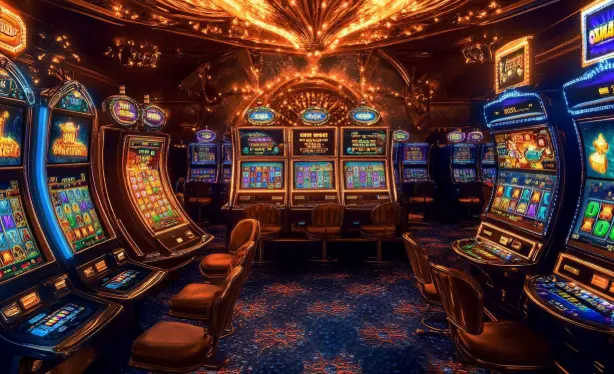
Casino Skill Based Games: The Ultimate Strategy Guide for Advantage Players
🎰 The landscape of modern gambling has shifted dramatically. While luck-driven slots dominate floor space, a sophisticated subculture of advantage players gravitates toward Casino Skill Based Games. These are not mere games of chance; they are intellectual battlegrounds where mathematical expectation, psychological fortitude, and strategic execution converge. This guide dissects the mechanics of skill-centric wagering, offering a granular analysis of how to mitigate house edge through informed decision-making. We explore the theoretical underpinnings and practical applications that separate the casual bettor from the calculated strategist.

Deconstructing the Skill vs. Chance Paradigm in Regulated Markets
From a regulatory and operational standpoint, the classification of a game hinges on the "predominance test." Jurisdictions worldwide increasingly differentiate between games of pure chance and those where skill materially influences outcomes. For the astute player, this distinction is paramount. Games like poker, blackjack, and sports betting fall into the skill-based category because long-term profitability is achievable through advanced strategy deployment. The house edge in these games is not static; it is a variable contingent upon the player's proficiency. Understanding game theory, probability distribution, and expected value (EV) calculations is non-negotiable for anyone serious about exploiting these markets.
Blackjack: Mastering the Fundamental Strategy Matrix and Card Counting
Blackjack remains the gold standard of beatable casino games. The core of expert play lies in the basic strategy—a mathematically derived set of decisions that minimizes the house edge to approximately 0.5%. However, the elite player transcends basic strategy by employing card counting systems like Hi-Lo or Omega II. These systems track the ratio of high to low cards, allowing the player to adjust bet sizing and playing decisions based on a fluctuating "true count." When the deck is rich in tens and aces, the player gains a statistical edge, enabling the deployment of insurance bets and modified splitting strategies. This is not gambling; it is calculated investment under uncertainty.

Poker: Exploitative Play, Range Analysis, and Meta-Game Dynamics
Poker is the quintessential skill game, where the house merely takes a rake and players compete against one another. The strategic depth is immense, encompassing pre-flop range construction, post-flop equity realization, and river polarization. The modern poker theorist employs a Game Theory Optimal (GTO) approach, creating an unexploitable baseline strategy. Yet, the most profitable players deviate from GTO to exploit population tendencies—a concept known as exploitative play. Mastering bet sizing tells, timing tells, and combinatorial hand analysis is essential. The mental game, including tilt control and bankroll management, often distinguishes the break-even grinder from the high-stakes professional.
Sports Betting and Esports: Line Shopping, Arbitrage, and Predictive Modeling
Sports wagering has evolved into a sophisticated financial market. The skill component involves predictive analytics, injury report interpretation, and market sentiment analysis. Professional bettors engage in line shopping to secure the best odds, arbitrage to guarantee risk-free profit, and middling to capitalize on line discrepancies. The integration of data science, including regression models and Monte Carlo simulations, empowers the modern bettor to identify positive EV opportunities. Furthermore, the rise of esports has created a new frontier where deep game knowledge and meta-analysis provide a tangible edge over recreational bettors. 🏆
Bankroll Management and Psychological Resilience as Strategic Pillars
No strategy guide is complete without addressing the operational framework of advantage play. Proper bankroll management dictates bet sizing relative to the total capital, ensuring survival through inevitable variance. The Kelly Criterion is a widely respected formula for optimizing growth rate while minimizing risk of ruin. Equally critical is psychological resilience. The emotional discipline to execute a mathematically correct play despite recent losses is a hallmark of professional-grade skill. Tilt, fear, and greed are the enemies of EV. The skilled player operates with a stoic, process-oriented mindset, detaching self-worth from short-term outcomes and focusing on the long-run convergence toward theoretical expectation.
The Future of Skill-Based Wagering: Hybrid Models and Regulatory Shifts
The proliferation of skill-based gaming machines and regulated online platforms signals a paradigm shift. Developers are increasingly incorporating elements of skill—such as puzzle-solving or reaction time—into traditional formats to appeal to a demographic that seeks agency over chance. This evolution challenges regulators to redefine gambling frameworks, creating opportunities for skilled players to compete in novel ecosystems. As artificial intelligence and machine learning tools become more accessible, the advantage player's toolkit will expand, enabling real-time probability assessments and dynamic strategy adjustments. The convergence of technology and wagering ensures that the pursuit of skill-based edges will remain a dynamic and intellectually rewarding endeavor. ✨