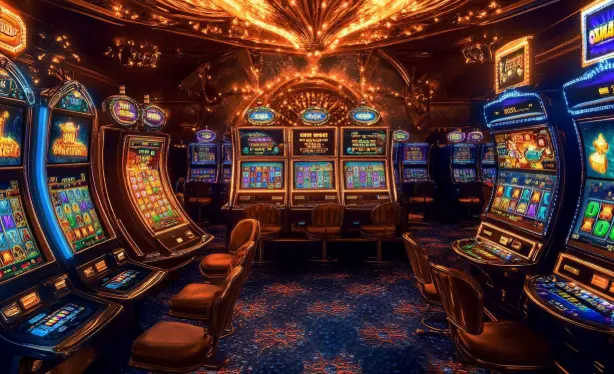
Why Standard UPS Units Fail on the US Casino Floor
A generic rack-mount UPS will get your slot machines killed during a brownout faster than a drunk tourist burns through a hundred on the penny slots. The brutal truth most casino floor managers learn the hard way is that a standard US casino backup battery bank UPS is not built for the chaos of a gaming pit. Slot cabinets pull surge-heavy, non-linear loads that chew through cheap VRLA batteries like candy. You are not powering a server closet here — you are powering hundreds of independent gaming terminals, each with its own coin hopper, bill validator, and touchscreen drawing dirty, spiky current. 💀
The Real Electrical Load of Modern Slot Cabinets
Walk into any tribal or riverboat casino and you will find cabinets running dual 500W power supplies with peak inrush currents that laugh at consumer-grade surge protection. A proper uninterrupted power supply for slots has to handle harmonic distortion north of 15% without flinching. The moment the utility grid sags, your average office UPS trips into bypass mode and the reels freeze mid-spin. That is not a glitch — that is a regulatory nightmare and a cash-handling audit waiting to explode. Regulators do not care that the power company failed. They care that the meter data corrupted. ⚡
Battery Bank Chemistry and the Heat Problem
Here is where the hardware insiders separate from the brochure readers. Lithium iron phosphate banks are now the only sane choice for a casino backup battery bank sitting in a cabinet cage under a 90-degree pit floor. Lead-acid off-gasses hydrogen and demands ventilation that the average slot base was never designed to provide. LFP chemistry gives you 3,000 to 5,000 cycles at 80% depth of discharge, holds voltage flat under load, and will not thermal-runaway when a cabinet fan dies at 3 AM. The catch? You need a BMS that actively balances cells every single cycle, not the passive junk found in bargain units.
Transfer Time Kills Slots — Pure Sine and Zero-Gap Switching
Five milliseconds of transfer time is the difference between a clean log and a hand-pay dispute. Slots run on switched-mode supplies that will drop a logic board the instant voltage collapses. True online double-conversion topology is non-negotiable. Anything advertising standby or line-interactive design has no business within fifty feet of a gaming floor. You want zero-gap switching, pure sine wave output at under 3% THD, and an inverter that stays synced to grid frequency even during a sag. When the lights flicker across the whole US property, your EGMs should not even register it.

Runtime Sizing — The Math Nobody Wants to Do
Operators chronically undersize battery banks because they size for graceful shutdown, not ride-through. On a casino floor you need enough hold-up time for the backup generator to spin up, stabilize, and accept load — call it a real world 90 to 180 seconds at full nameplate draw. Multiply your per-cabinet load, add 20% headroom for aging cells, and then double it because pit managers always add cabinets after install. A bank sized for ten minutes of true full-load runtime is the sweet spot between capital cost and operational sanity. 🎰
Monitoring, Compliance, and Silent Failures
The deadliest failure mode is the battery that reads 100% health on the front panel while its internal resistance has crept past 200% of spec. Network-managed UPS units with per-string impedance monitoring and SNMP traps are mandatory for any multi-floor US casino deployment. Silent cell degradation is how you get a simultaneous brownout across three banks and a floor full of dark screens. Push those telemetry feeds into your building management system and set alert thresholds at 60% capacity, not the factory default of 20%. By the time a cell hits 20%, you are already gambling with a floor-wide outage.